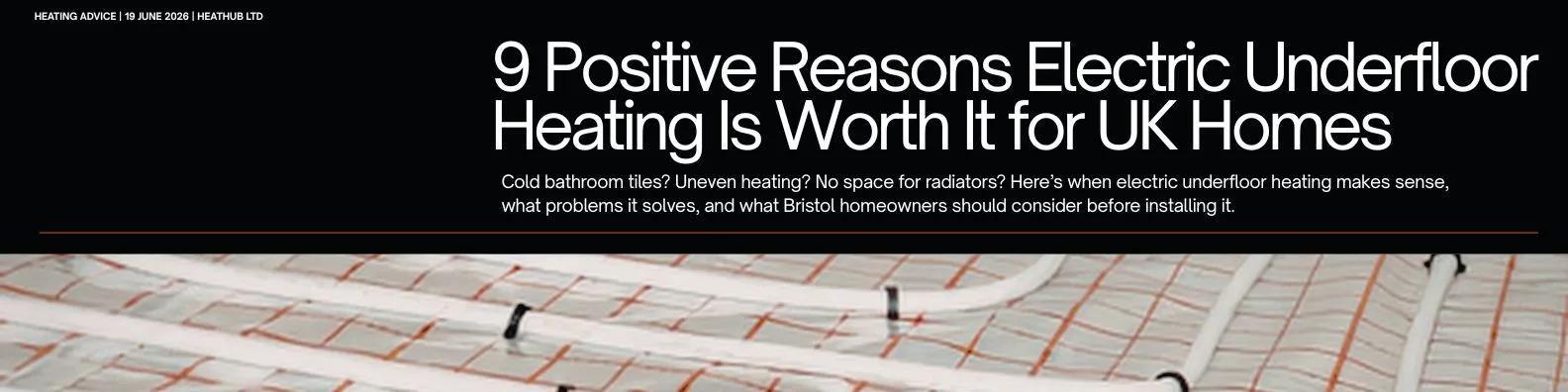
Electric underfloor heating warms the floor using electric mats or cables and is ideal for bathrooms, en-suites, kitchens and extensions where comfort is the priority. It solves cold floors, frees up wall space, gives even heat and can be controlled room by room. It is best used as comfort heating in smaller, well-insulated rooms with proper insulation and a thermostat.
If you have ever stepped onto freezing bathroom tiles on a winter morning, struggled with a cold kitchen extension, or wondered whether radiators are taking up too much wall space, you may already have searched for electric underfloor heating. This guide answers the questions Bristol homeowners ask most: is it expensive, does it work with different flooring, can it replace radiators, and is it suitable for older properties?
What Is Electric Underfloor Heating?
Electric underfloor heating is a heating system installed beneath your flooring. Instead of using hot water pipes like a wet underfloor system, it uses electric heating cables or mats to warm the floor surface.
Electric systems are often used in bathrooms, en-suites, kitchens, conservatories, utility rooms and small extensions because they are generally easier to retrofit than water-based systems. According to the Energy Saving Trust, dry or electric systems are cheaper to install than wet systems, though running costs vary depending on room size, insulation and how often you use them.
9 Reasons Electric Underfloor Heating Could Be Worth It
- It solves the problem of cold floors. Comfort is the main benefit. It gently warms the floor surface, so rooms feel more comfortable even before the air temperature rises fully.
- It works well in bathrooms and en-suites. A smaller room keeps running costs in check, the comfort benefit is immediate, and it can reduce your reliance on a large radiator.
- It can help free up wall space. Because it sits beneath the floor, it allows more flexible room design.
- It provides even heat distribution. It spreads warmth across the floor area, helping the room feel more evenly heated.
- It is often easier to retrofit than wet underfloor heating. Electric systems are simpler to install in individual rooms during renovations than wet systems that need pipework connections.
- It can be controlled room by room. Many systems use individual thermostats or smart controls, so you heat only the room you need, when you need it.
- It can work with different flooring types. With the correct product selection and insulation boards, it can go beneath tiles, laminate, vinyl, engineered wood and some carpet systems.
- It can improve comfort in extensions and converted spaces. These rooms often feel colder due to their construction, and underfloor heating provides practical, targeted warmth.
- It adds a premium feel to your home. Warm floors are often associated with high-quality bathrooms, modern kitchens and comfortable living spaces.
5 Signs Your Home Could Benefit from Electric Underfloor Heating
- Your bathroom floor is always cold. If the tiles are uncomfortable underfoot, underfloor heating can be an effective comfort upgrade.
- You are renovating a kitchen or bathroom. The best time to install is while the flooring is already being replaced, which keeps disruption to a minimum.
- You have limited radiator space. If radiators restrict your layout, underfloor heating gives you more design freedom.
- One room feels colder than the rest of the house. A single cold room, often in an extension, can be given targeted warmth without changing your central heating.
- You want better heating control. Programmable controls make room-specific heating simple and convenient.
Thinking About Underfloor Heating in Bristol?
Call Heat Hub on 0117 251 0299 for honest advice on whether electric underfloor heating suits your room, serving Bristol, Bath and Somerset.
Call for AdviceIs Electric Underfloor Heating Expensive to Run?
The honest answer is that it depends on room size, insulation, floor type, electricity tariff, thermostat settings and how long you run the system. Electric underfloor heating works best as comfort heating in specific rooms rather than as the sole heat source for a large, poorly insulated home. In a small, well-insulated bathroom on a schedule, it can be practical to run.
You can keep costs under control by using insulation boards beneath the system where suitable, fitting a programmable thermostat, heating only the rooms you need, avoiding unnecessary operation, and choosing the correct wattage for the room.
Can Electric Underfloor Heating Replace Radiators?
In some rooms, yes. In others, not necessarily. Electric underfloor heating can provide enough warmth for small, well-insulated spaces such as bathrooms and en-suites. Whether it can fully replace a radiator depends on the room's heat loss.
The assessment takes in room size, insulation level, window and door quality, floor construction, your existing heating system and how the room is used. For larger rooms, underfloor heating often works best alongside an existing heating system rather than replacing it completely.
Is Electric Underfloor Heating Suitable for Older Bristol Homes?
Many Bristol homes are Victorian terraces, older solid-wall properties, converted flats or extended family homes, and electric underfloor heating can work well in them with careful planning. The biggest factor is insulation. Poorly insulated rooms lose heat faster and make the system work harder.
Before installation, the floor build-up, insulation options, electrical capacity and overall heating demand all need assessing. For older homes, the best approach is not simply to install more heating. It is to match the heating system to the property.
The Disadvantages of Electric Underfloor Heating
It is only fair to weigh the drawbacks alongside the benefits.
- It can be more expensive to run than wet underfloor heating over larger areas.
- It is usually installed during flooring work, so retrofitting involves some disruption.
- It must be installed safely and correctly, in line with UK electrical requirements.
- It may not be suitable as the only heat source in poorly insulated rooms.
- Flooring compatibility must be checked before installation.
The best results come from proper planning, correct product selection, suitable insulation and safe installation. Electric underfloor heating is well worth considering if you want comfort heating in a specific room, especially a bathroom, en-suite, kitchen, utility room or extension, and particularly when the flooring is already being replaced.
Frequently Asked Questions
Yes, electric underfloor heating can be worth it for bathrooms, kitchens, en-suites and smaller rooms where comfort is the priority, especially when the flooring is already being replaced.
Running costs depend on room size, insulation, your electricity tariff and how you use it. It is usually more cost-effective in smaller, well-insulated rooms controlled by a thermostat.
Yes. Tiles are one of the most common floor finishes for electric underfloor heating because they transfer heat well and are popular in bathrooms and kitchens.
In small, well-insulated rooms it may replace a radiator. In larger or poorly insulated rooms, it works better alongside your central heating rather than replacing it.